

Hands-on with the world’s first miniLED laptop: MSI’s Creator 17 - florahischat
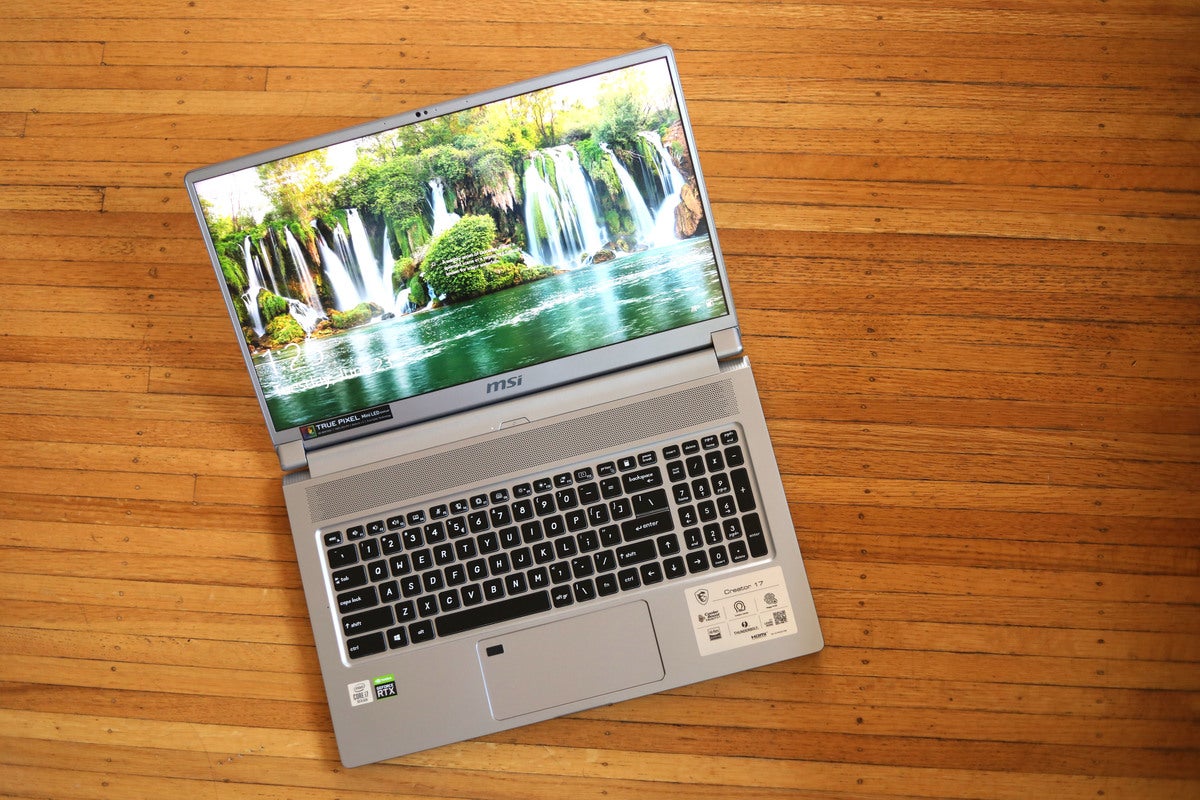
With the MSI Creator 17, we undergo seen the light. As the name implies, the laptop features a 17.3-inch, 16:9 screen with a UHD 4K resolution panel. But it's not the sizing, nor the resolution, that matters here. As the beginning laptop in the world with a miniLED blind, it's crisper and brighter (can you say 1,000 nits?!) than anything we've seen before.
Typical laptops utilization standard LEDs that are larger and terminus ad quem the density in a laptop screen. A typical display Light-emitting diode mightiness be 2mm in size.
A miniLED could be a tenth the size of that unimaginative LED. Organism able to pile LEDs closer together inside of a display means the potential for more zones, which gives you blacker blacks, and accumulated contrast, excessively.
 Gordon Mah Ung
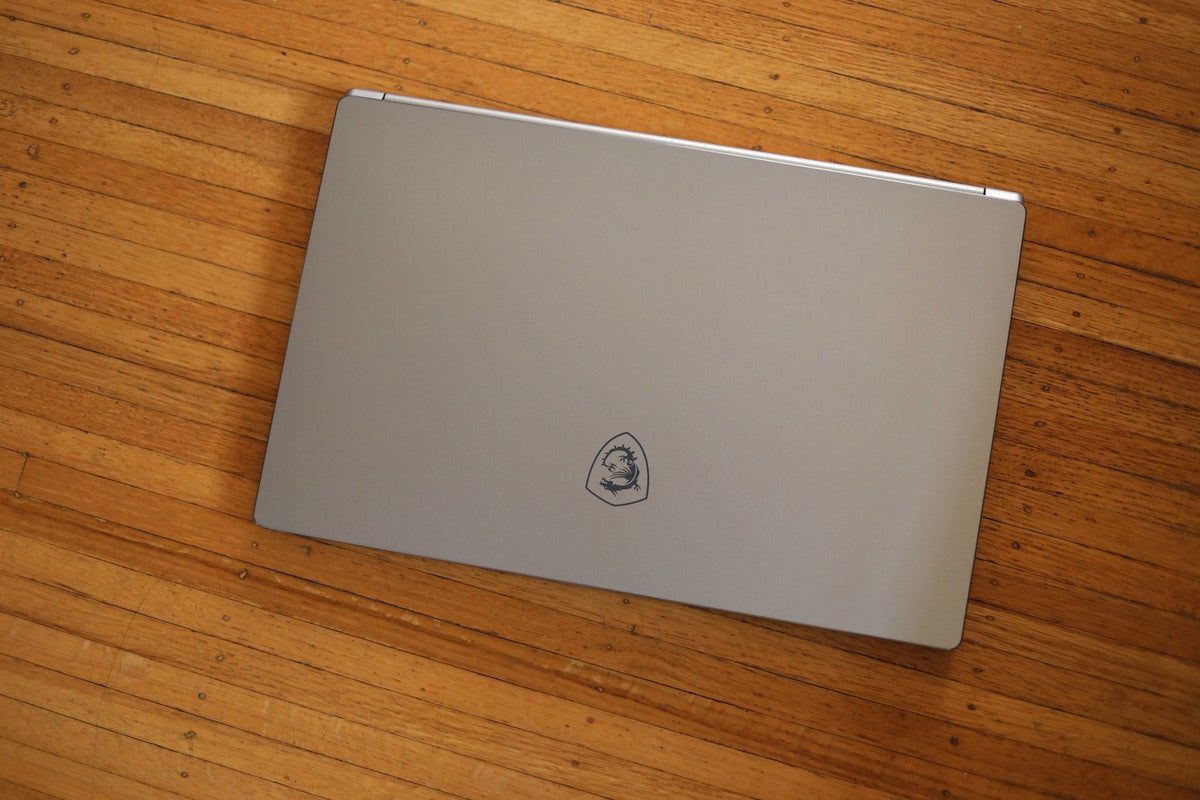
 The MSI Lord 17 is relatively flimsy and has the same footprint of most 17-inch laptops. The eloquent color is organized to help it blend in.
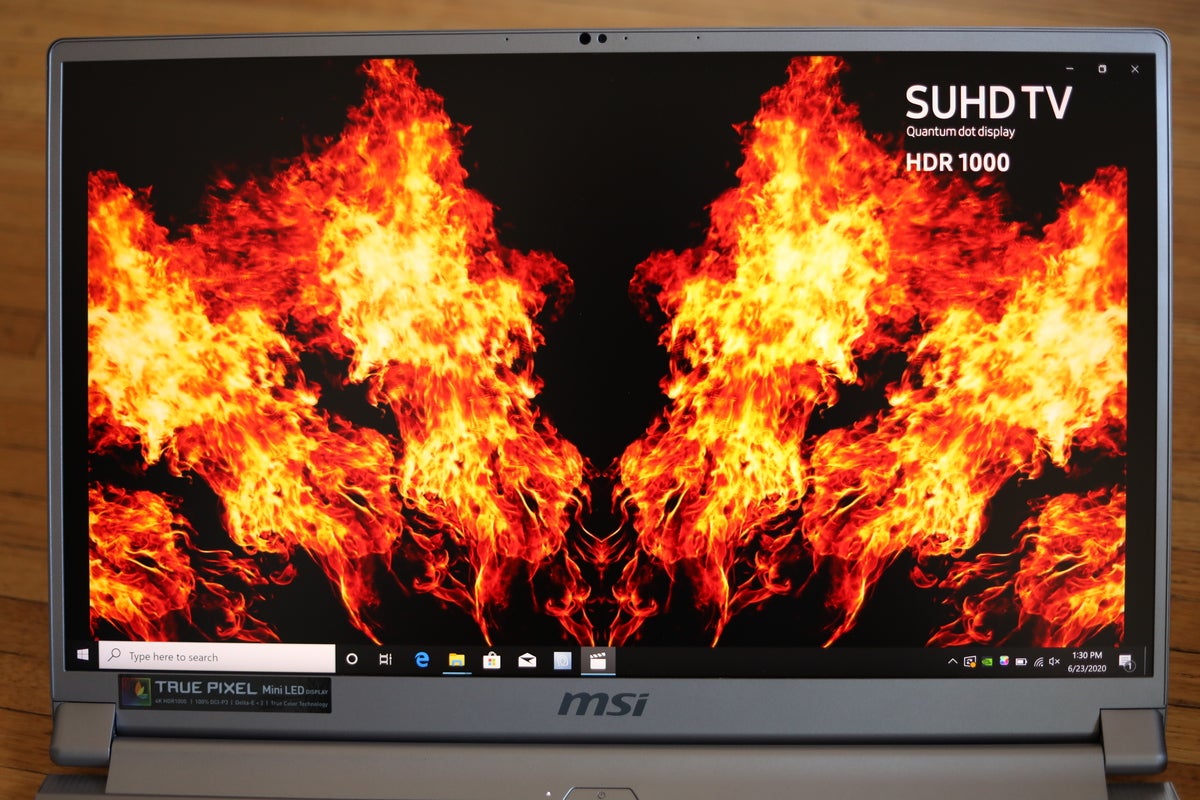
The most eye-infectious part, though, is that brightness. A budget laptop might barely stumble 230 nits, while most gaming laptops push 300. Laptops such as G's Aero 17 and its HDR400 4K instrument panel may emit busy 450 nits. The MSI's HDR1000 panel hits 1,000 nits connected paper. We measured ours at almost 940 nits.
For a warm comparison we ordered finished Gigabyte's Aero 17 with its HDR 400, 4K and 10-bit panel side by side to the Creator 17, and ran both finished a pic and video photograph-stunned. Both are large, til now slim, laptops aimed at cognitive content creators World Health Organization need a little portability.
The Aero 17's panel, an AU Optronics 329B, is no slouch itself at greater than 400 nits. But side by side to the Creator 17's AU Optronics AUO278E, information technology definitely was puzzled for smartness. Photos on the Creator 17 had a pop and saturation that at multiplication made the Aero 17's panel look after pale. Playing back video on the Creator 17, scenes of fire exploded off the screen with an intensity that just can't personify finished white-bread screens.
 Gordon Mah Ung
 Want to know wherefore the the Video HDR 1000 demos use flames? Because they're bright to make you feel alike you're there.
Non all was perfect. Even though the panel reports that it is 10-bit capable, Windows recognised it as an 8-bit panel. That gave the Aero 17's 10-bit the advantage in the display of smoother gradations.
We can't say the Divine 17's miniLED panel has that black-hole contrast of an OLED, merely it was pretty good. And we have yet to see a 17-inch OLED in a laptop. Most, we suspect, are just getting out of the way for miniLED panels and one of these days microLED, which is expected to offer near OLED-levels of contrast.
If you can e'er get your eyes ripped away from the screen, the rest of the laptop is pretty sweet. The Jehovah 17 comes with equal to an 8-core 10th-gen Core i7-10875H and up to a GeForce RTX 2080 Large.
 Gordon Mah Ung
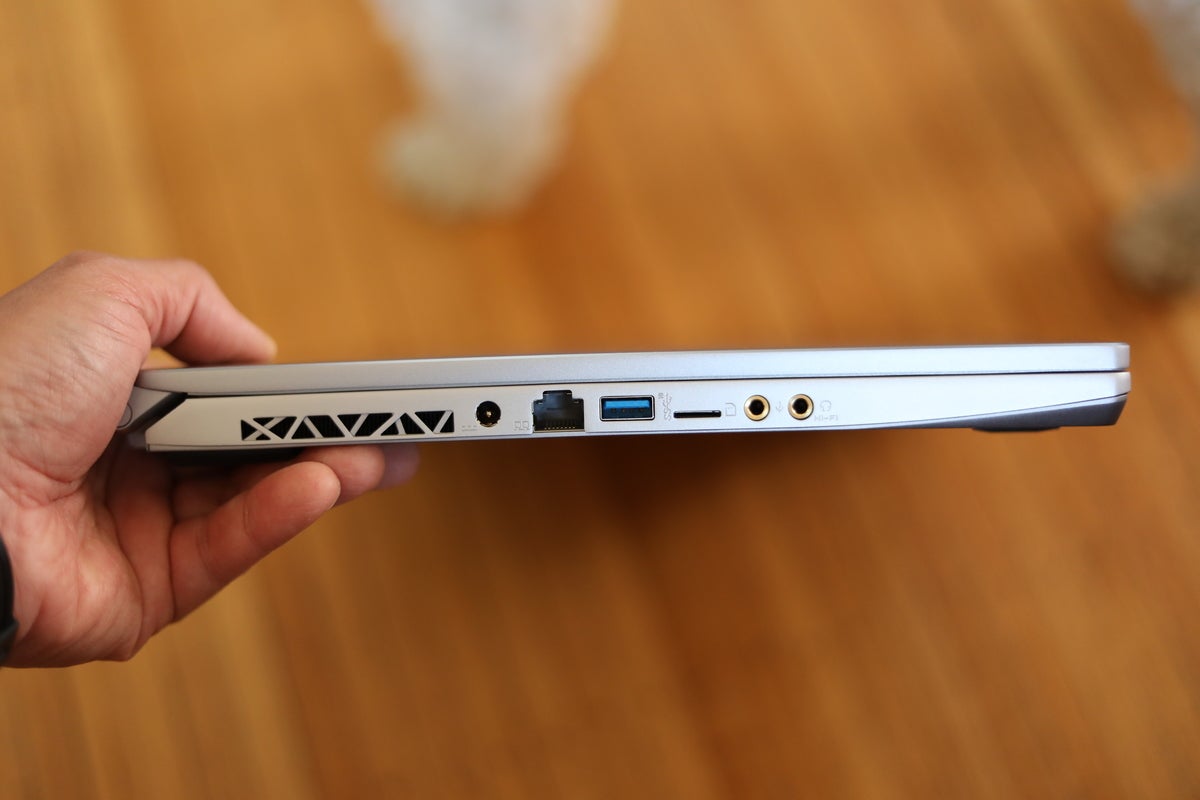
 The unexhausted side of the Creator 17 features a power jack for the 230-James Watt power brick, Gigabit ethernet, USB-A, microSD and a pair of linear audio jacks.
The Creator 17 appears to live supported off the same chassis as the gaming-focused GS75 Stealth. At the time, the GS75 Stealth wowed us with its five-pound weight. The Creator 17 is a trifle heavier at 5.3 pounds. That's still pretty good. For comparison, the Aero 17 is 5.6 pounds, as is the Asus ROG Zephyrus Duo 15 (with its second screen, naturally).
The survival of the fittest of ports isn't bad either. On the left you get a dedicated charging port for the 230-watt power brick, a Gigabit ethernet left, USB-A, microSD, and two parallel ports. The two analog ports is mostly an appeal to streamers and competitors who want the separate analog channels, likely a hangover from the GS75 Stealth bod. What we recover less, reusable though, is the microSD porthole. To be fair, a stack of drones now use microSD. Most creators record to SD cards, though, so they Crataegus oxycantha need to get an foreign reader or USB-C hub.
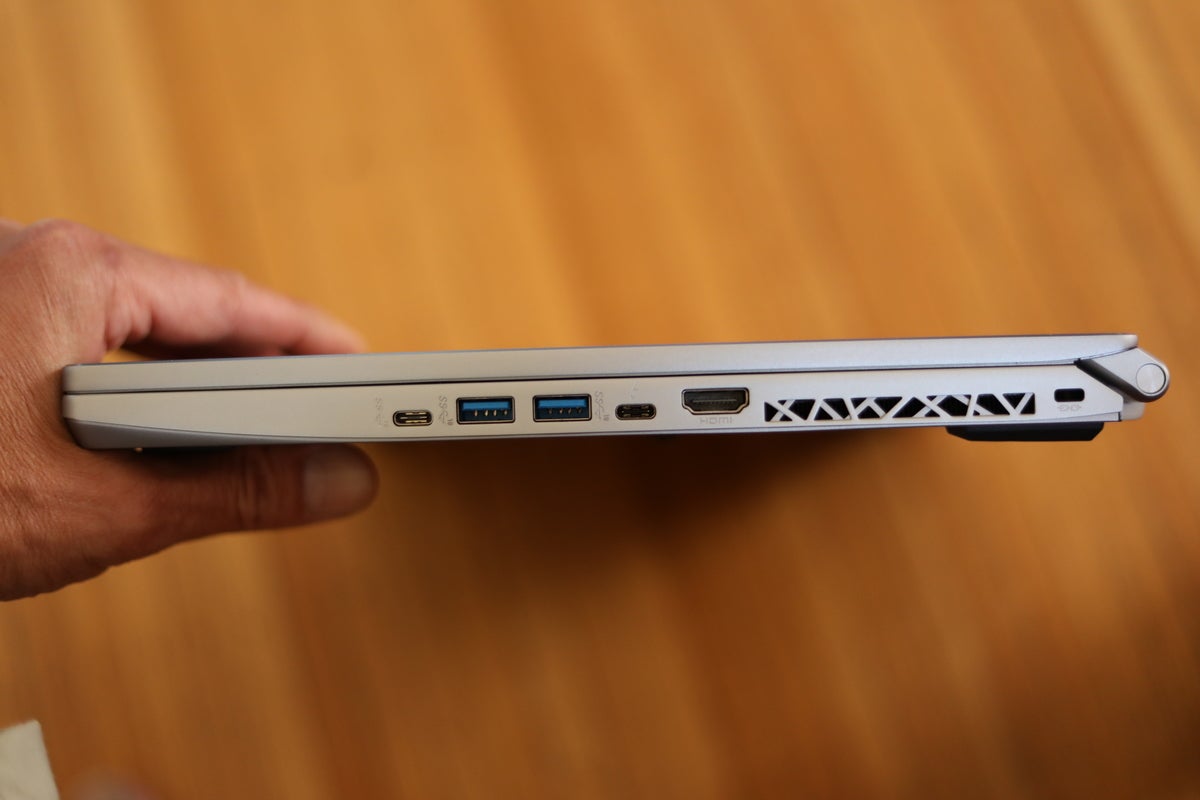
The right side gives you Thunderbolt 3, cardinal USB A, USB-C, HDMI, and Kensington mesh larboard.
 Gordon Mah Ung
 The left side of the Creator 17 features a Thunderbolt 3 porthole, two USB-A, a second USB-C, brimful-size HDMI 2.0 and lock port.
We're hush in the midway of our review, merely two things already concern United States: fan noise, and speaker quality. This is a tidy sum of hardware in a 5.3-British pound sterling consistence, and IT feels like the feature film MSI threw overboard was the audio organisation.
We'll chafe carrying into action in the starchy review. We expect it to track within what's expected of a Intel 10th-gen 8-core Core i7 and GeForce RTX 2080 Super Max-Q, but keyed for creators kind of than all-out gamers.
That's totally details, though, compared to the main consequence–that blazing, 1,000-nit miniLED experience. For now, there is no other laptop happening terra firma like MSI's Creator 17.
 Gordon Mah Ung
Source: https://www.pcworld.com/article/399339/hands-on-with-the-worlds-first-miniled-laptop-msis-creator-17.html
Posted by: florahischat.blogspot.com
0 Response to "Hands-on with the world’s first miniLED laptop: MSI’s Creator 17 - florahischat"
Post a Comment